Snipping Tool is the default screenshot capturing utility in Windows 10. Introduced first with Windows Vista, the Snipping Tool allows you to capture the entire screen, window, or a specific area on the screen. By snipping I’m guessing your wanting to cut a section of your screen as a snapshot? Its built into the operating system. Press the following keys at the same time: shift-command (the Apple key-4 and the mouse cursor will change to a cropping tool that you can highlight the edges of what you want with.
Like Windows 7 and Windows 8, Windows 10 too includes the Snipping Tool which lets you take screenshots in Windows 10 computer. This Snipping Tool or SnippingTool.exe is located in the System32 folder, but it (shortcut) can also be accessed via the following location:

C:ProgramDataMicrosoftWindowsStart MenuProgramsAccessories
Snipping Tool for Windows
Lets us have a look at ways to use the Snipping Tool in Windows 10/8/7, effectively.
Capture screenshots in Windows
When on the Metro UI or Start Screen, you can click on the Snipping Tool tile to open it. The tool will open, and you will find yourself immediately on your desktop. When in the Desktop mode, you can open it by typing Snipping Tool in the Charms Bar Search. If you use it regularly, you can also create its desktop shortcut to access it easily.
To pin it as a Tile, when on the Windows 8 Start Screen, right click on the screen (not the tile). Click on the ‘All App’ option. In the bar that pops up at the bottom of the screen, you will see Snipping Tool in All apps. Simply right-click on it and choose the ‘Pin to Start’ option to put it on your Start screen as a Tile.
When you capture a shot from a browser & save it as an HTML file, the URL appears below the snip. To prevent the URL from appearing, open Options and clear the Include URL below snips (HTML only) check box.
Open Snipping Tool using Hotkey
If you are a frequent user of the Snipping Tool, you can create a hotkey for it. To do so open the System32 folder and right-click on SnippingTool.exe (or on its shortcut in the Program/Accessories folder). Select Properties. Here, you can set a hotkey for it. I have as an example selected F5. So to open the snipping tool, all I have to do next time is press F5.
The Snipping Tool allows you to take four different types of screenshots:
- Free-form Snip lets you draw and captures any irregular part of the screen
- Rectangular Snip will allow you to drag the cursor around an object to form a rectangle
- Window Snip will let you select an open window, such as a browser window or dialog box and let you capture it
- Full-screen snip will capture the entire screen when you select this type of snip.
Once you have changed the Settings to your requirements, you can click on New or Ctrl+PrtnScr to take captures.
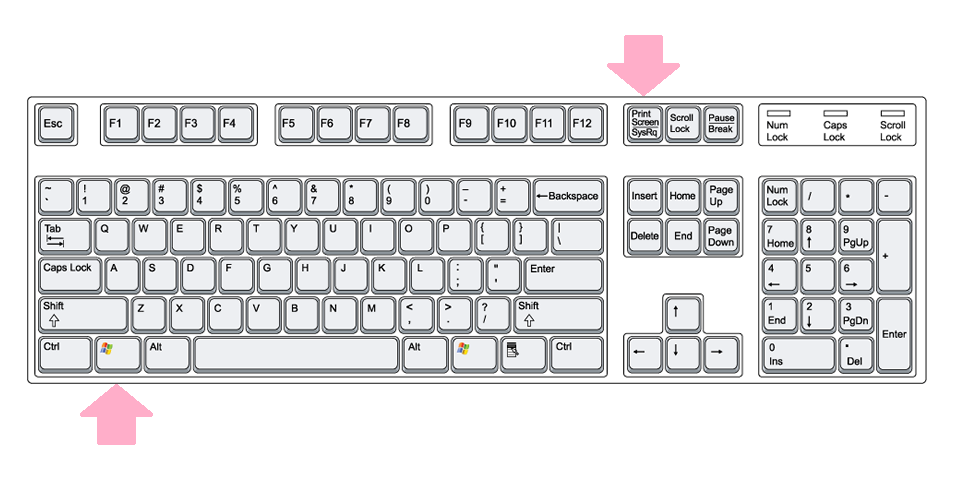
Win+PrntScr in Windows
Clicking on Win+PrntScr in Windows will let you capture the screenshot as per your settings. The image is automatically saved in your Pictures folder.
Snipping Tool Keyboard shortcuts
- Alt+M – Choose a snipping mode
- Alt+N – Create a new snip in the same mode as the last one
- Shift+Arrow keys – Move the cursor to select a rectangular snip area
- Alt+D – Delay capture by 1-5 seconds
- Ctrl+C – Copy the snip to clipboard
Disable white overlay
When the Snipping Tool is open and active, a white overlay appears. If you want to turn it off, you can do so via its Options. Uncheck the option to Show screen overlay when Snipping Tool is active.
To save the image, you have to click on the Save Snip button An extra feature in Windows 8 is that the full screen shots are automatically saved in your Pictures folder.
If you wish to share a snip, you can click the Arrow on the Send Snip button, and then select an (email) option from the menu.
The Snipping Tool will not normally work on the start screen. You will be able to only capture the full start screen using the Win+PrntScr buttons and not a part of the start screen. If you click your allotted hotkey when on the start screen, your windows will automatically switch to the desktop mode with the snipping tool opened. But there is a trick to do so, which we will see a bit later!
Capture Context Menu using Snipping Tool
If you wish to capture screenshots of your context menu, start Snipping Tool and click on Esc. Next right-click on the desktop, file or folder and then press Ctrl+PrntScr. This will let you capture the right-click context menu. In Windows 7 you can also capture the start menu using this trick.
Capture parts of Windows 8 Start Screen
In Windows 8, to capture a part of your start screen, open Snipping Tool, press Esc. Next, press Win key yo switch to Start Screen and then press Ctrl+PrntScr. Now move your mouse cursor around the desired area. This will let you capture a part of your Windows 8 start screen. To capture the entire Start Screen, you can, of course, press Win+PrntScr.
NOTE: Windows 10 lets you set time delays to capture screenshots.
Capture part of screen using Hotkey
In Windows 10 Creators Update and later you can capture a part of your screen using a keyboard shortcut – WinKey+Shift+S. You can even create a desktop shortcut using the command snippingtool /clip in the Location box.
If you are aware of any more tips or tricks for the Snipping Tool, please do share them in the comments section.
You may also want to check out our freeware Windows Screen Capture Tool that allows you to capture full screen, selected screen area, windows, webpages and more. You can also add watermarks to your captured screenshot or edit the image using its basic image editor.
UPDATE: Check out the new Microsoft Snip Screen Capture Tool.
Related Posts:
Snipping Tool is a free screen capture utility that comes built-in in modern Windows operating system beginning from Windows Vista. It continues to be developed and improved since then with much more better versions in Windows 7, Windows 8, Windows 8.1 and especially Windows 10.
Unfortunately, there is no keyboard shortcut or accelerator key press sequence been associated or assigned by default to Snipping Tool. Thus, users unable to quickly run the Snipping Tool when needed by just pressing keyboard keys without opening Start Menu or Desktop, or make a click or tap on Taskbar.
However, by using feature in Windows operating system, it’s possible to assign or associate a keyboard shortcut to instantly launch Snipping Tool. In fact, there are two ways to do it.
Shortcut For Windows Snipping Tool
Method 1: Windows Shortcut Key
First method is by setting the shortcut key for Snipping Tool in the file properties of the Snipping Tool shortcut or icon in Start Menu, Desktop, Taskbar or any other place. To do so, right click on Snipping Tool icon on the Desktop or Taskbar, or Snipping Tool shortcut in Start Menu, and select Properties. In the Shortcut pane, there is a field named Shortcut key. Click on the text field after the “Shortcut key”, but you can’t type in text there. Simply press the keyboard accelerator keys that you want to use as the keyboard shortcut for Snipping Tool, and the shortcut keys will automatically appear in the text field. Note that only certain combination of keys can be used.
Shortcut Key For Snipping Tool
Method 2: Keyboard Shortcut for Taskbar / Quick Launch Bar
Second alternative is to use keyboard shortcuts default on Taskbar (in Windows 8 / 8.1 / 10) or Quick Launch bar (in Windows 7 / Vista). To use this method, pin or place a Snipping Tool shortcut in the Taskbar (for Windows 10 / Windows 8.1 / Windows 8) or Quick Launch bar (for Windows 7 / Windows Vista, where Snipping Tool will probably prompt you to display icon in Quick Launch bar on first run, else you can set the preference in Snipping Tool options).
Mac Os Snipping Tool Shortcut
Once Snipping Tool icon appears in Taskbar or Quick Launch bar, count its position from the left, and press Alt + (location number of Snipping Tool icon in Quick Launch bar) will run Snipping Tool instantly.