Made with
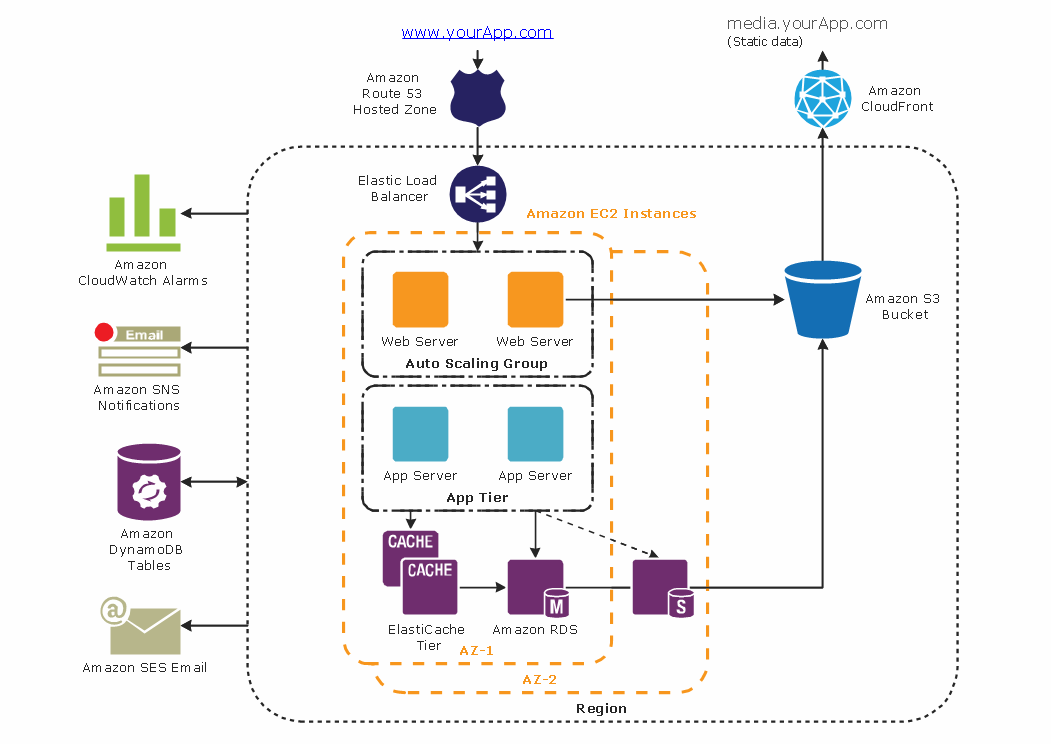
The AWS Architecture Diagrams solution includes icons, sample and templates for several Amazon Web Services products and resources, to be used when creating architecture diagrams. The icons are designed to be simple so that you can easily incorporate them in your diagrams and put them in your whitepapers, presentations, datasheets, posters or any technical material you like.
800.MACTOOLS 3 INTRODUCTION The Mac Tools™ MDT 10 is a professional scan tool built into a durable AndroidTM tablet. Up to four hours of battery run time. Extremely fast boot time and Swift On function.
For IT specialists, system designers and network administrators, the AWS Architecture Diagrams solution offers a wide range of recognizable graphic icons to help illustrate a diagram, as well as a helpful selection of templates and samples to model a design on. Architecture diagrams are a great way to communicate your design, deployment and topology. Here you will find an official collection of AWS resources that will help you build great AWS Architecture diagrams.
'The AWS Architecture Center is designed to provide you with the necessary guidance and application architecture best practices to build highly scalable and reliable applications in the AWS cloud. These resources will help you understand the AWS platform, its services and features, and will provide architectural guidance for design and implementation of systems that run on the AWS infrastructure.'[from aws.amazon.com]
ConceptDraw - Diagramming Tool for:
Architecture Diagram Software
- Create Web Application Architecture
- Architect infrastructure based on AWS® (Amazon Web Services)
- Design application services based on AWS® (Amazon Web Services)
- Design auto-scalable architecture
- Design for elastic compute cloud
- Create Amazon Web Services planning diagrams
- Illustrate whitepapers and presentations
- Create vector graphics files

See also:
- Diagramming software for Amazon Web Service
Diagrams, charts, schemes, symbols and icons - AWS Simple Icons for Architecture Diagrams
Diagramming for Amazon Web Services architecture - Design Elements and Icons - Samples
Network Diagrams — AWS Architecture
| Part of a series on |
| macOS |
|---|
|

The architecture of macOS describes the layers of the operating system that is the culmination of Apple Inc.'s decade-long research and development process to replace the classic Mac OS.
After the failures of their previous attempts; Pink, which started as an Apple project but evolved into a joint venture with IBM called Taligent, and Copland, which started in 1994 and was cancelled two years later, Apple began development of Mac OS X with the acquisition of NeXT's NeXTSTEP in 1997.
Note that Mac OS X was renamed to OS X in 2012 and then again to macOS in 2016.
- 1Development
Development[edit]
NeXTSTEP[edit]
NeXTSTEP used a hybrid kernel that combined the Mach 2.5 kernel developed at Carnegie Mellon University with subsystems from 4.3BSD. NeXTSTEP also introduced a new windowing system based on Display PostScript that intended to achieve better WYSIWYG systems by using the same language to draw content on monitors that drew content on printers. NeXT also included object-oriented programming tools based on the Objective-C language that they had acquired from Stepstone and a collection of Frameworks (or Kits) that were intended to speed software development. NeXTSTEP originally ran on Motorola's 68k processors, but was later ported to Intel's x86, Hewlett-Packard's PA-RISC and Sun Microsystems' SPARC processors. Later on, the developer tools and frameworks were released, as OpenStep, as a development platform that would run on other operating systems.
Rhapsody[edit]
On February 4, 1997, Apple acquired NeXT and began development of the Rhapsody operating system. Rhapsody built on NeXTSTEP, porting the core system to the PowerPC architecture and adding a redesigned user interface based on the Platinum user interface from Mac OS 8. An emulation layer called Blue Box allowed Mac OS applications to run within an actual instance of the Mac OS and an integrated Java platform.[1] The Objective-C developer tools and Frameworks were referred to as the Yellow Box and also made available separately for Microsoft Windows. The Rhapsody project eventually bore the fruit of all Apple's efforts to develop a new generation Mac OS, which finally shipped in the form of Mac OS X Server.
Mac OS X[edit]
Mac Tool For Architecture Diagrams Program
At the 1998 Worldwide Developers Conference (WWDC), Apple announced a move that was intended as a response to complaints from Macintosh software developers who were not happy with the two options (Yellow Box and Blue Box) available in Rhapsody. Mac OS X would add another developer API to the existing ones in Rhapsody. Key APIs from the Macintosh Toolbox would be implemented in Mac OS X to run directly on the BSD layers of the operating system instead of in the emulated Macintosh layer. This modified interface, called Carbon, would eliminate approximately 2000 troublesome API calls (of about 8000 total) and replace them with calls compatible with a modern OS.[2]
At the same conference, Apple announced that the Mach side of the kernel had been updated with sources from the OSFMK 7.3 (Open Source Foundation Mach Kernel) [3] and the BSD side of the kernel had been updated with sources from the FreeBSD, NetBSD and OpenBSD projects.[2] They also announced a new driver model called I/O Kit, intended to replace the Driver Kit used in NeXTSTEP citing Driver Kit's lack of power management and hot-swap capabilities and its lack of automatic configuration capability.[4]
At the 1999 WWDC, Apple revealed Quartz, a new Portable Document Format (PDF) based windowing system for the operating system that was not encumbered with licensing fees to Adobe like the Display PostScript windowing system of NeXTSTEP. Apple also announced that the Yellow Box layer had been renamed Cocoa and began to move away from their commitment to providing the Yellow Box on Windows. At this WWDC, Apple also showed Mac OS X booting off of a HFS Plus formatted drive for the first time.
The first public release of Mac OS X released to consumers was a Public Beta released on September 13, 2000.
References[edit]
- ^Apple PR (1997-11-19). 'Apple Extends Rhapsody Developer Release with Mac OS Compatibility Environment, Code-Named 'Blue Box''. apple.com. Archived from the original on 1998-12-02. Retrieved 2006-10-13.
- ^ abScott Anguish (May 1998). 'WWDC 98 Summary'. stepwise.com. Retrieved 2006-10-13.[dead link]
- ^Apple WWDC Videos (2017-02-19), Apple WWDC 2000 Session 106 - Mac OS X: Kernel, retrieved 2018-07-06
- ^Scott Anguish (1998-05-14). 'Rhapsody Core OS: Intro to the I/O Driver Architecture'. stepwise.com. Retrieved 2006-10-13.[dead link]